

Artemis Fine Arts and Arte Primitivo to co-host Feb. 26-27 Pre-Columbian, antiquities & fine art auction series online
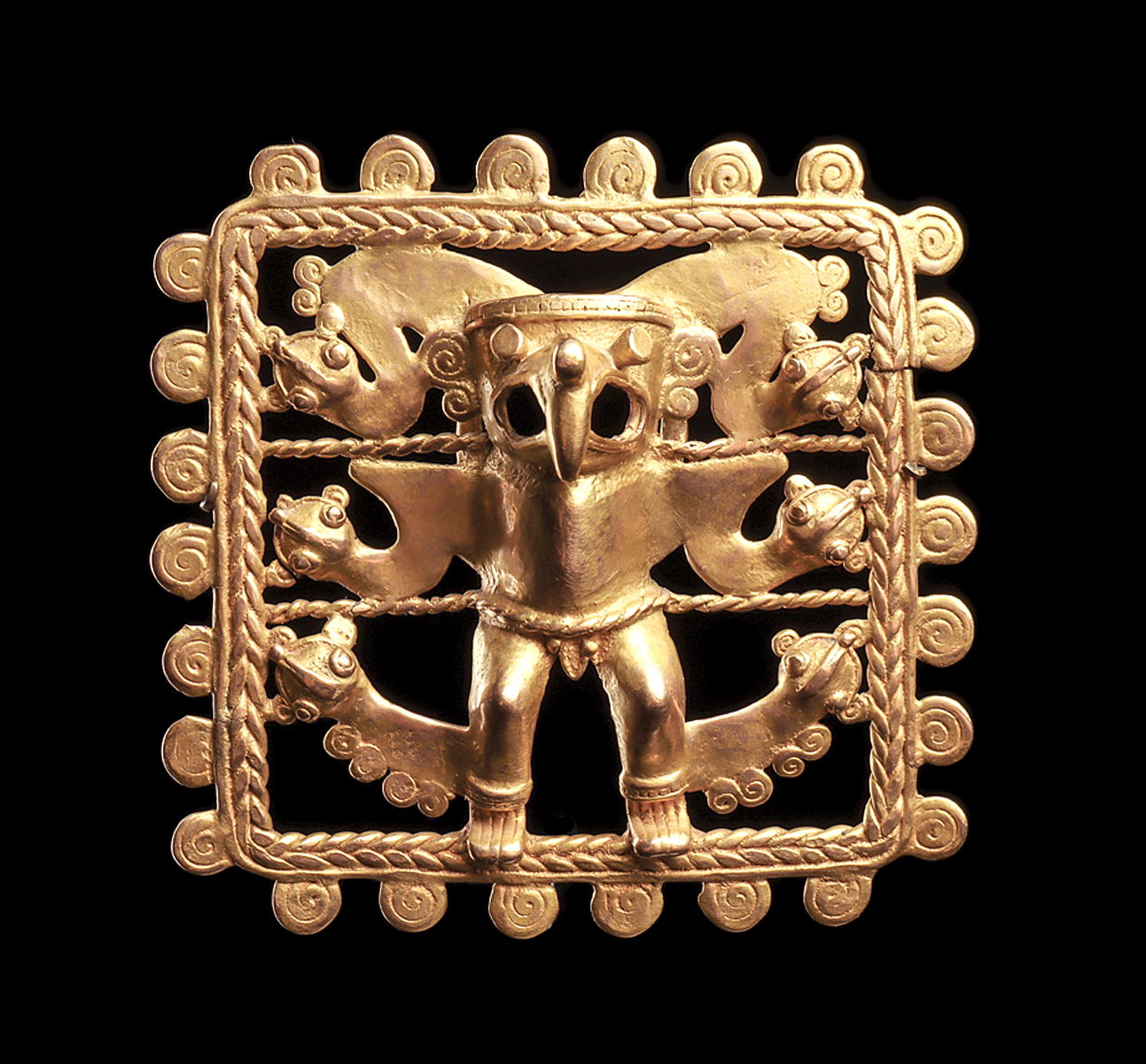
Large, fine openwork Veraguas-Diquis gold pendant depicting a large central deity having a human body with a long openwork bird of prey hooked beak, wearing a fancy double plumed headdress. Estimate: $40,000-$50,000
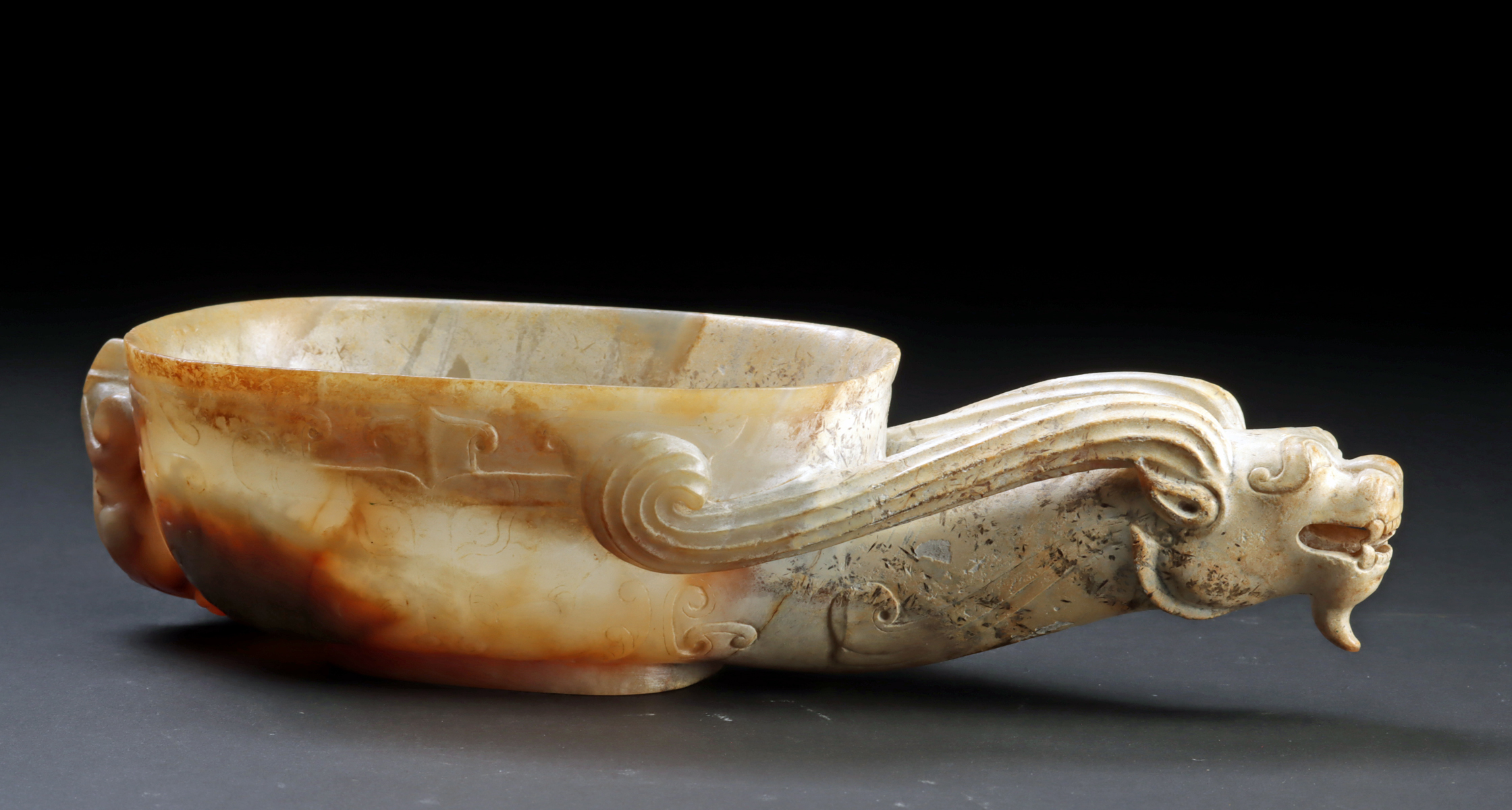
Far East, China museum-exhibited, carved jade cup of elongated form, from the Warring States period, circa 475-to-221 BCE; a shallow, oval vessel worked from pale white jade. Estimate: $30,000-$45,000
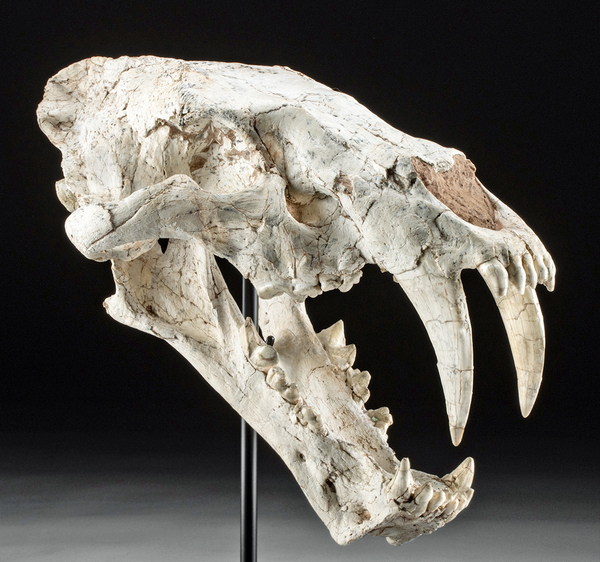
Fossilized skull of a female saber-toothed ‘Machairodus kurteni’ displaying a pair of imposing 4-inch sabers and presented on a custom stand. Origin: Central Asia, eastern Kazakhstan, 2-15 million years old. Estimate: $80,000-$100,000
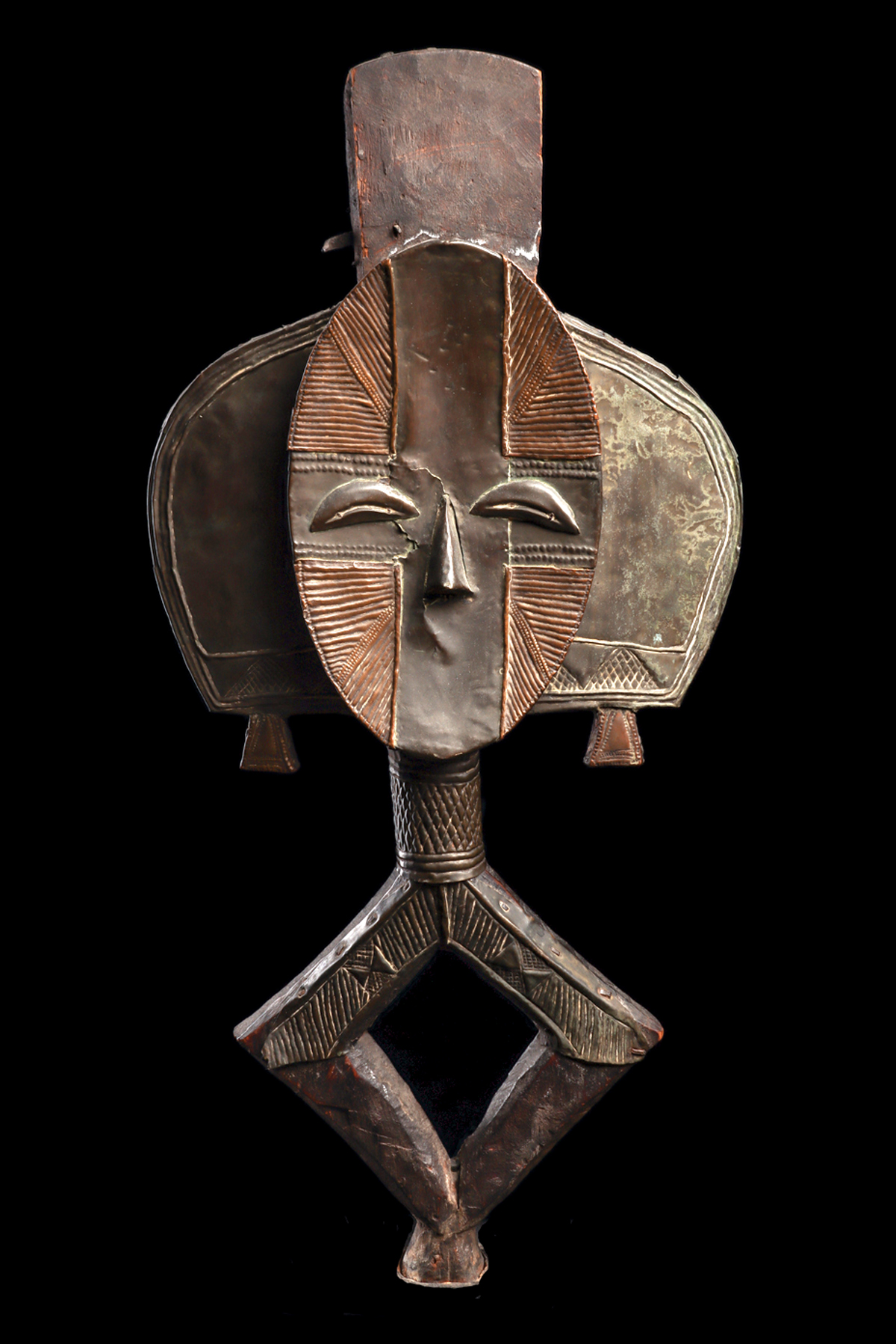
Bakota “Ngulu” (or reliquary garden figure) of abstract figural form, carved of wood with a slender concave face covered with hammered brass alloy sheets in cruciform background, 24½ inches tall. Estimate: $12,000-$18,000
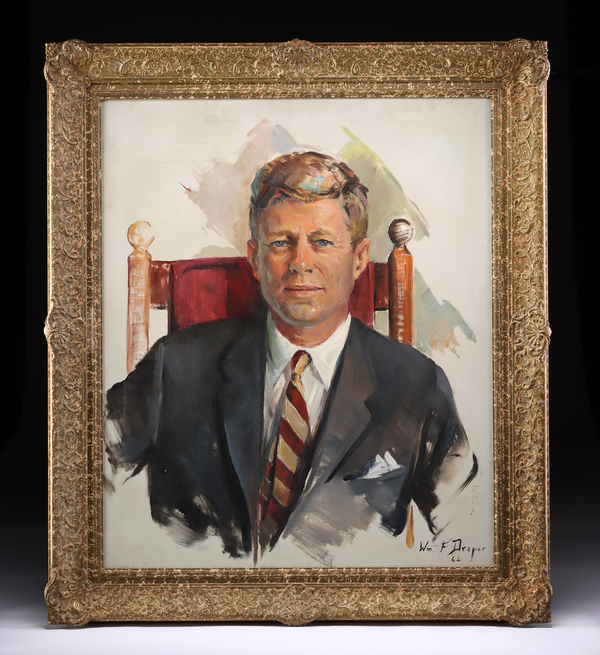
Oil-on-canvas portrait of President John F. Kennedy painted in 1962 by William Franklin Draper (American, 1912-2003), 24½ inches by 29½ inches (sight). Estimate: $200,000-$250,000
Day 1 features Pre-Columbian, Native American, African, Tribal and Ethnographic Art; Day 2 showcases Egyptian, Greek, Roman and Near Eastern antiquities, more.
Day 1 features 540 lots of fine Pre-Columbian, Native American, African, Tribal and Ethnographic Art. Day 2 contains 380 lots of Egyptian, Greek, Roman and Near Eastern antiquities, Asian art, fine arts and fossils. The meticulously-curated two-day event is now open to bidding through Artemis Fine Arts’ dedicated online platform as well as Arte Primitivo’s established online bidding system.
Pre-Columbian objects are led by a large, fine openwork Veraguas-Diquis gold pendant depicting a large central deity having a human body with a long openwork bird of prey hooked beak, wearing a fancy double plumed headdress. The 4-inch by 4¼-inch pendant, an impressive and beautiful example, has an estimate of $40,000-$50,000. Other lots to watch include a large and important pair of gold and mosaic ear ornaments and an Olmec pottery seated baby with elongated cranium.
Premier Native American items are coveted by collectors. A rare ceramic vessel with rounded body and short neck from the Mississippian Caddo culture, dating to circa 1200-1400 CE, is sculpted in high relief with human hands and bone motifs. It has an estimate of $3,500-$5,000. Also, a circa 1912-1915 Hopi polychrome feather design bowl with a lug for hanging, made by Nampeyo or a Nampeyo family member, possibly Nampeyo’s daughter Annie, should realize $2,500-$3,500.
Among the highlighted tribal objects is a Bakota “Ngulu” (or reliquary garden figure) of abstract figural form, carved of wood with a slender concave face covered with hammered brass alloy sheets in cruciform background, crescent-shaped applied eyes and a triangular nose. The 24½-inch-tall figure is expected to bring $12,000-$18,000. Other tribal lots include a Fang ancestral power reliquary garden head and a New Ireland Vanis mask by Edward Salle.
Day 2 advances with a distinguished selection of antiquities, including a carved Egyptian wooden figure shown seated on a throne in the form of a cobra-headed deity. The item is accompanied by a radiocarbon (C14) test confirming a date of 808 to 900 BCE. The 9-inch-tall figure is mounted on a custom stand and should command $8,000-$15,000. An Egyptian blue faience bowl with incised figures will also be offered.
Roman antiquities are highlighted by an especially-beautiful carved white marble horse head, originally from a full figure, depicted with perked ears, a raised mane, beautifully sculpted snout with flared nostrils, and heavy brow lines. The 4-inch-tall head is mounted on a black Lucite base and is expected to breeze to $12,000-$15,000. Also up for bid is a Roman silver phiale with a bust of Fortuna or Cybele.
A featured Near East lot is a sculptural libation or censer bowl from the Mesopotamia region during the Neo-Assyrian Empire of the Iron Age, circa 9th or 10th Century BCE. The bowl is formed as a lion grasping the rim of a shallow basin, with its head projecting forward over the edge. It’s a rare and striking object that combines symbolic animal imagery with functional design, reflecting the luxury arts of Neo-Assyrian culture. The estimate is $4,000-$6,000.
The Asian category is led by a Far East, China museum-exhibited, finely carved jade cup of elongated form, from the Warring States period, circa-475-to-221 BCE. The shallow, oval vessel is worked from pale white jade with areas of warm russet and gray mottling, reflecting the refined jade-working traditions of the late Eastern Zhou period. It has a pre-sale estimate of $30,000-$45,000. Also on offer is a lovely, exhibited Song Jizhou leaf-decorated bowl.
Reigning over the antique Jewish objects, a late-19th/early-20th-century silver Torah crown is composed of two openwork tiers surmounted by a finial topped with a Magen David and upheld by lions rampant that symbolize the Tribe of Judah. The beautifully-crafted silver crown, 18 inches tall, is from the Eastern Europe or Ottoman Jewish Communities. It should garner $20,000-$30,000. Also offered is a circa 12th-15th Century CE Jewish ritual stone panel with double menorah motifs.
Original artworks include an oil-on-canvas portrait of President John F Kennedy painted in 1962 by William Franklin Draper (American, 1912-2003). It measures 24½ inches by 29½ inches (sight) and is estimated at $200,000-$250,000. A massive mixed-media collage painting by James Verbicky (Polish-Canadian, b. 1973-), from the artist’s 2020 “Brainscans: A Portrait From Within” series, measures 87 inches by 180 inches and is expected to sell for $70,000-$100,000.
Collectors of natural history specimens are expected to pounce on one of the largest saber-toothed cat skulls ever offered at auction. The fossilized skull of a female saber-toothed Machairodus kurteni displays a pair of imposing 4-inch sabers and is presented on a custom stand. From eastern Kazakhstan in Central Asia’s Kalmakpai region, the skull dates to the Late Miocene sub-epoch, 2 million to 15 million years old. Estimate: $80,000-$100,000
Day 1 of the February 26-27 online auction will start at 7am MT/ 9am ET. Day 2 will start at 7am MT/ 9am ET. Absentee bidding is currently in progress. Whether bidding through Arte Primitivo, Artemis Fine Arts, LiveAuctioneers or Invaluable, auction participation is seamless across all platforms.
An important note for those who normally bid with Arte Primitivo, this sale will be conducted in a live-style format, meaning that rather than lots closing independently, at scheduled times, each lot will close sequentially, one after another, in the manner of a traditional live auction. Absentee bids and protected online bids may be placed at any time.
Following the main event, bidders may participate in Arte Primitivo’s Post-Auction Sale of Unsold Lots via the Arte Primitivo website – an additional opportunity to secure coveted pieces. This secondary sale will revert Arte Primitivo’s longstanding timed format (the primary auction alone will utilize the new live-style structure).
While the collaboration offers exceptional flexibility through multiple bidding avenues, clients are encouraged to utilize Arte Primitivo’s or Artemis Fine Arts’ native platforms, where buyer’s premiums are more advantageous and structured according to payment method. Dedicated specialists from both firms will be available by phone before, during and after the auction.
Artemis Fine Arts and Arte Primitivo ship worldwide and have their own in-house shipping departments to ensure quality control. View all lots, with detailed, authoritative descriptions and multiple photos, in the online catalog.
For additional information on any auction item, call Teresa Dodge at Artemis Fine Arts at 720-890-7700 or email her at teresa@artemisfinearts.com. Bid absentee or live online through https://auctions.artemisgallery.com/auctions/upcoming-auctions/
Teresa Dodge
Artemis Fine Arts
+1 720-890-7700
email us here
Legal Disclaimer:
EIN Presswire provides this news content "as is" without warranty of any kind. We do not accept any responsibility or liability for the accuracy, content, images, videos, licenses, completeness, legality, or reliability of the information contained in this article. If you have any complaints or copyright issues related to this article, kindly contact the author above.
